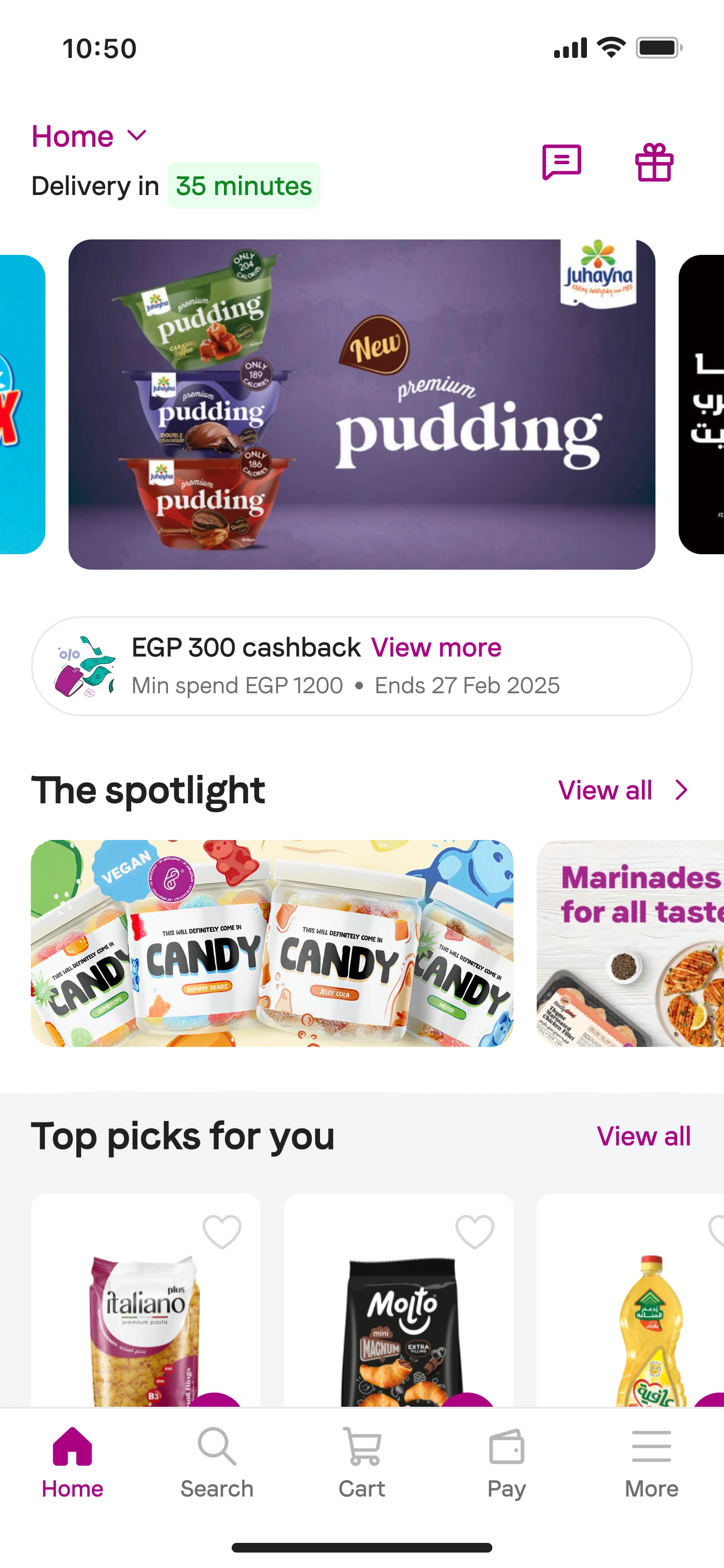
Inline category card
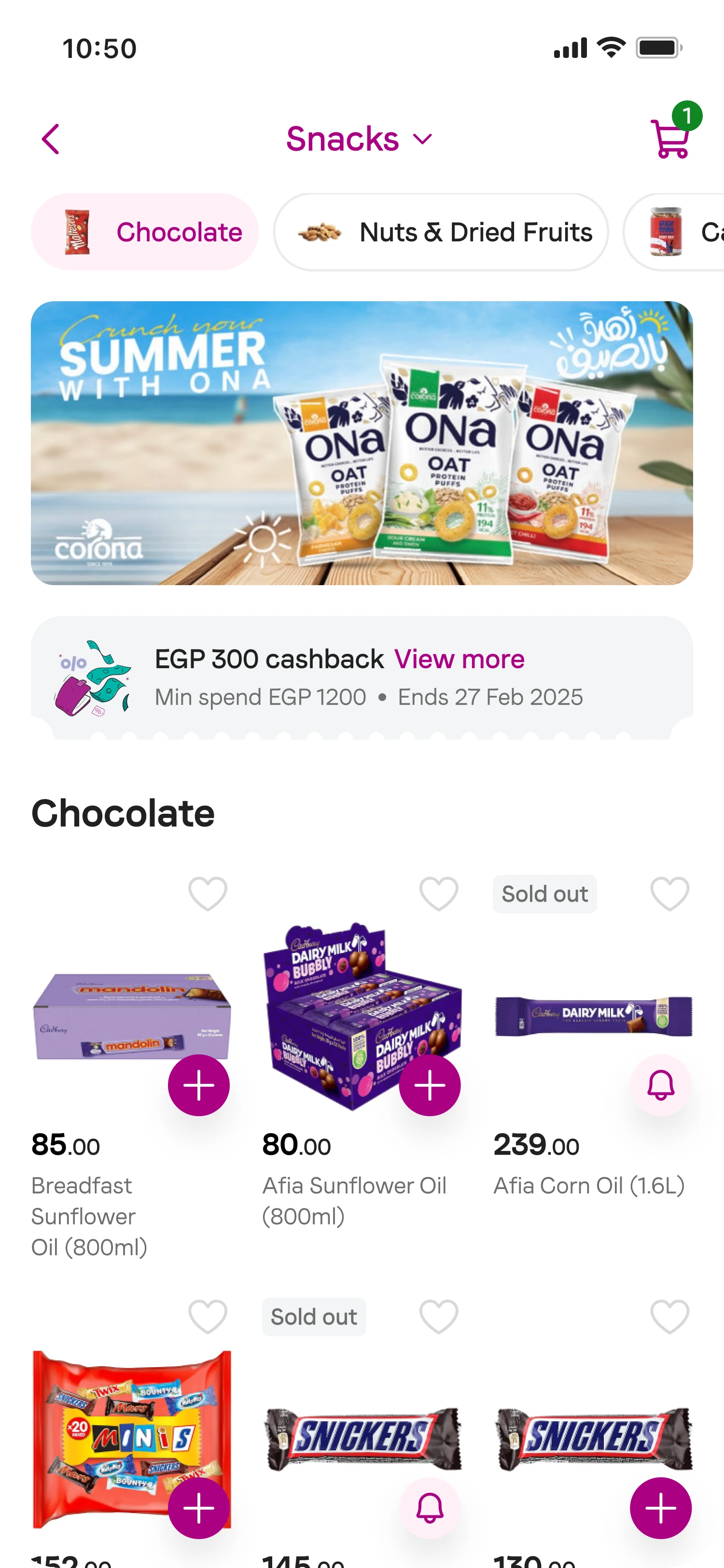
Trade-offs · Inline card
- Competes with category banners and merchandising
- Pushes products further below the fold
- Disappears once users scroll
Breadfast / Growth · Case study
Reconnecting
promotional value
with customer intent.
+17.3% coupon utilizationIn a 24-day controlled experiment ↗
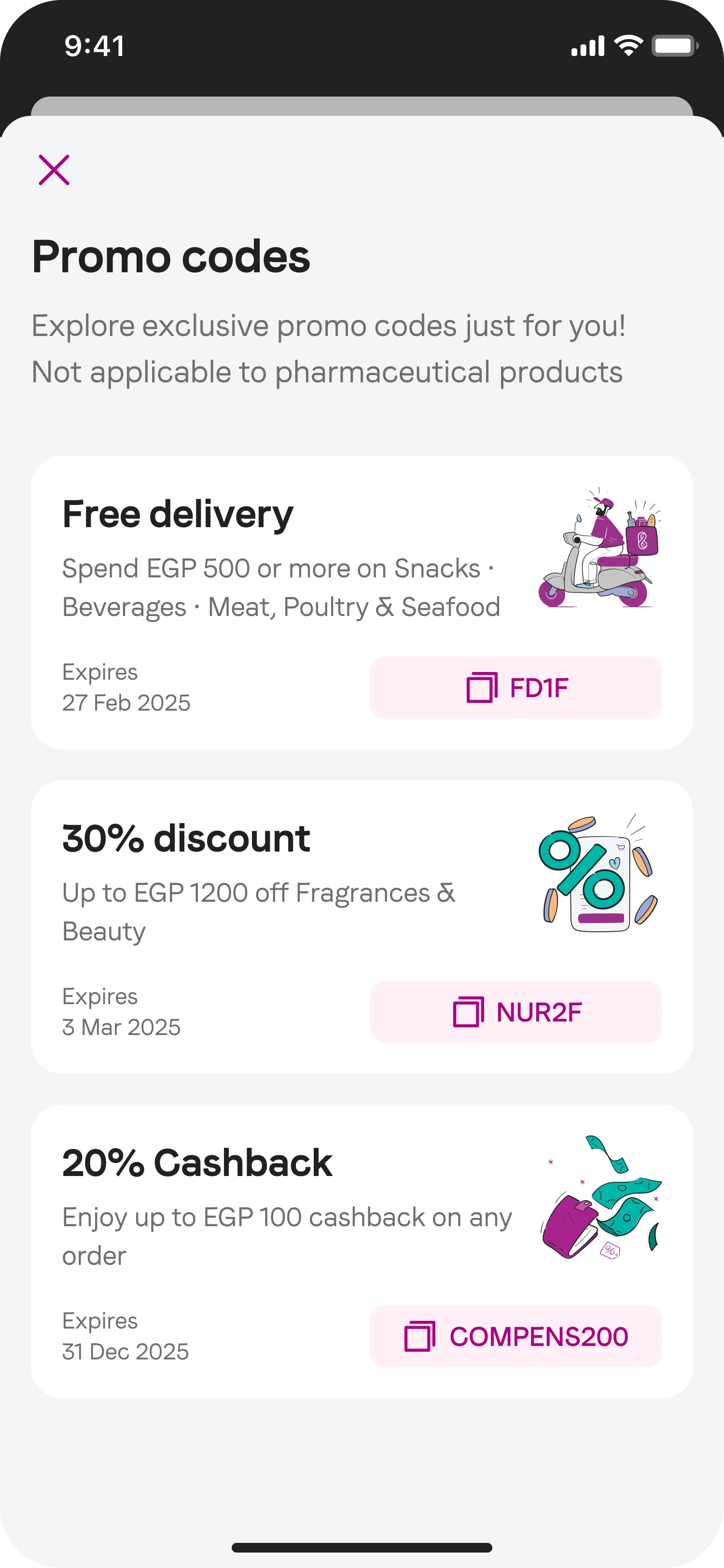

Building on the PM’s discovery of low coupon utilization, I led design from problem framing to implementation review. I explored alternatives, designed the experience, and tested it with our researcher. I coordinated visual design and content, then worked with engineering on handoff and QA.
The structural leak
Research
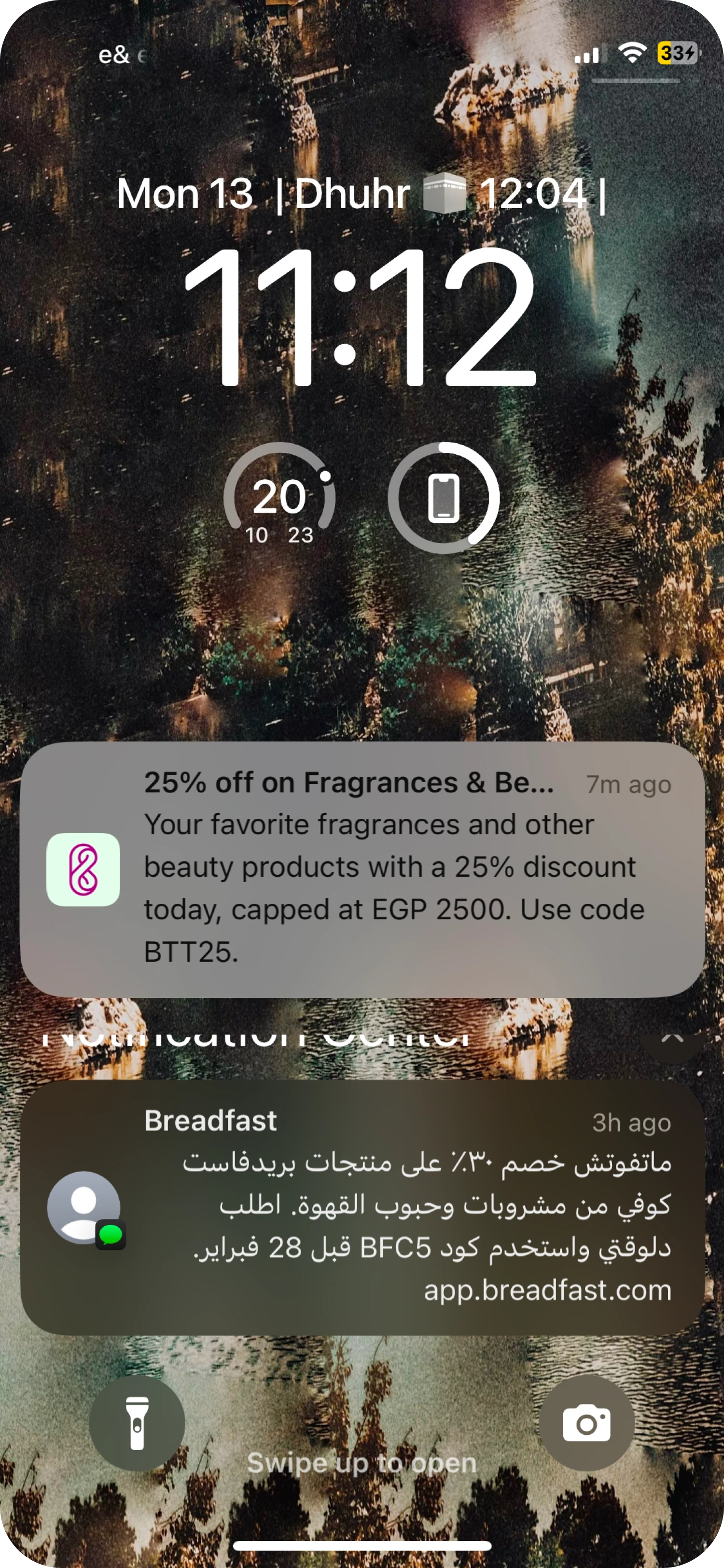
I receive promo codes, but when I want to order again, I don’t remember where I saw them.
Customers did not ask for more offers. They needed a way back in their flow to the value already available.
Strategic reframe
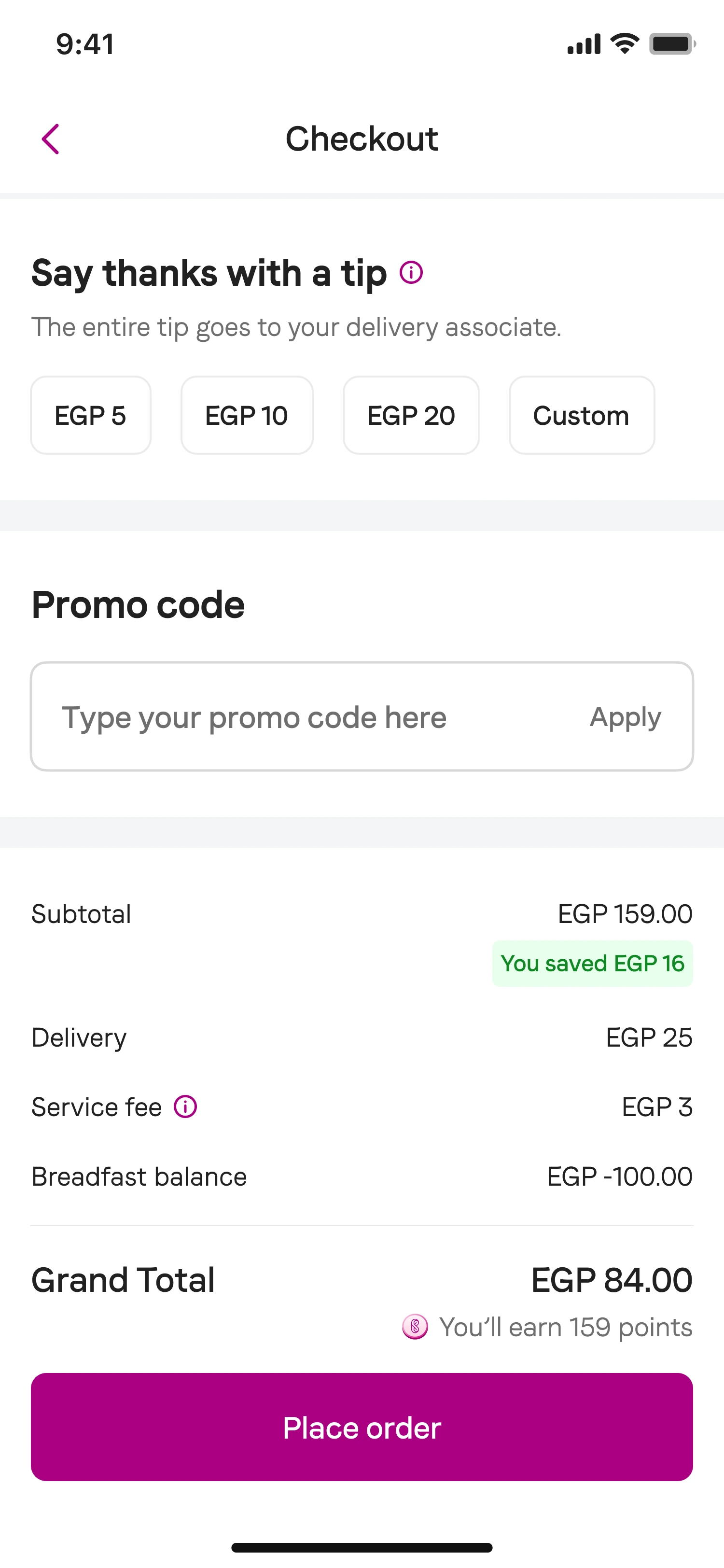
The offer arrives before the customer is ready to shop.
Bring available value into the shopping decision.
Help redemption, with less room to shape discovery.
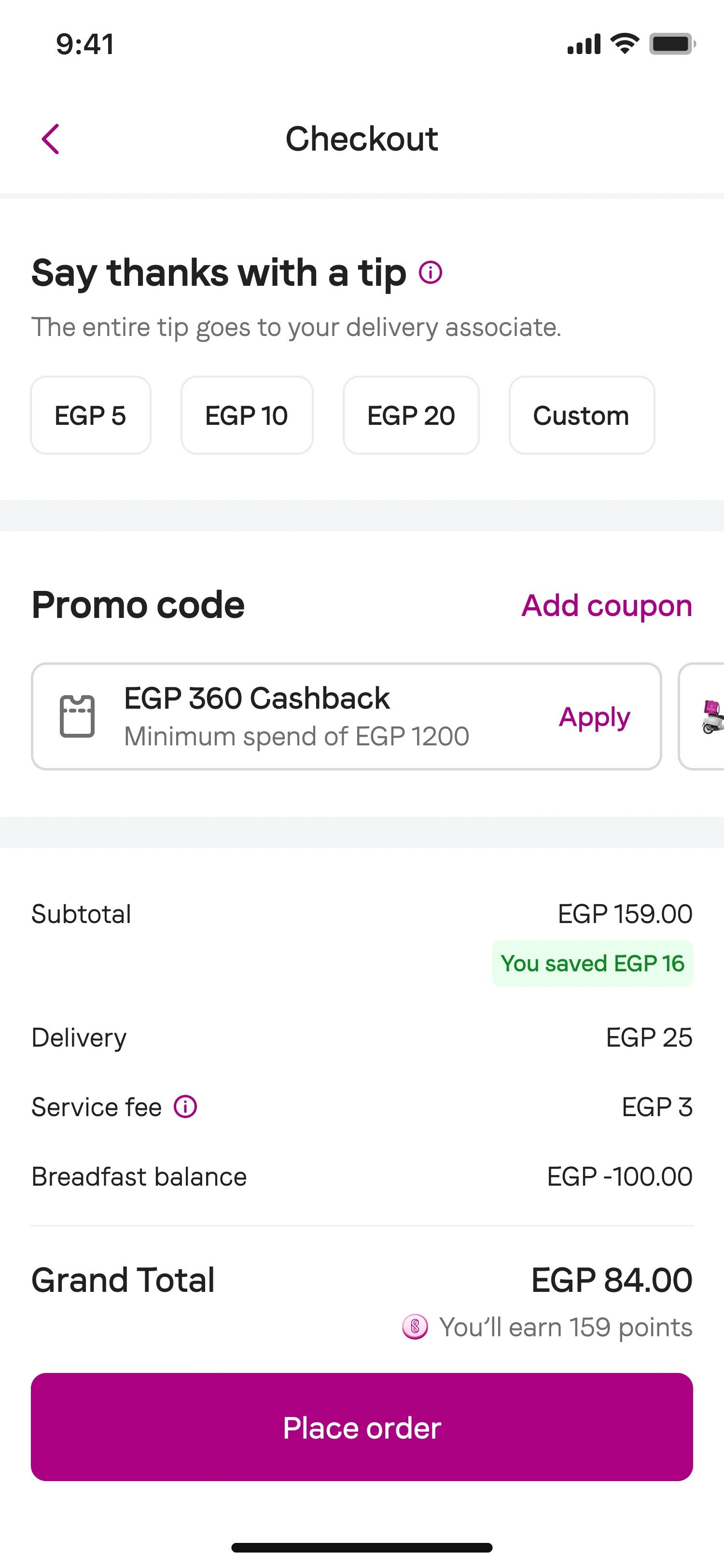
Directional evidence from an earlier test that moved exposure closer to browsing intent.
View the original experiment screen ↗Exploration
The product decision
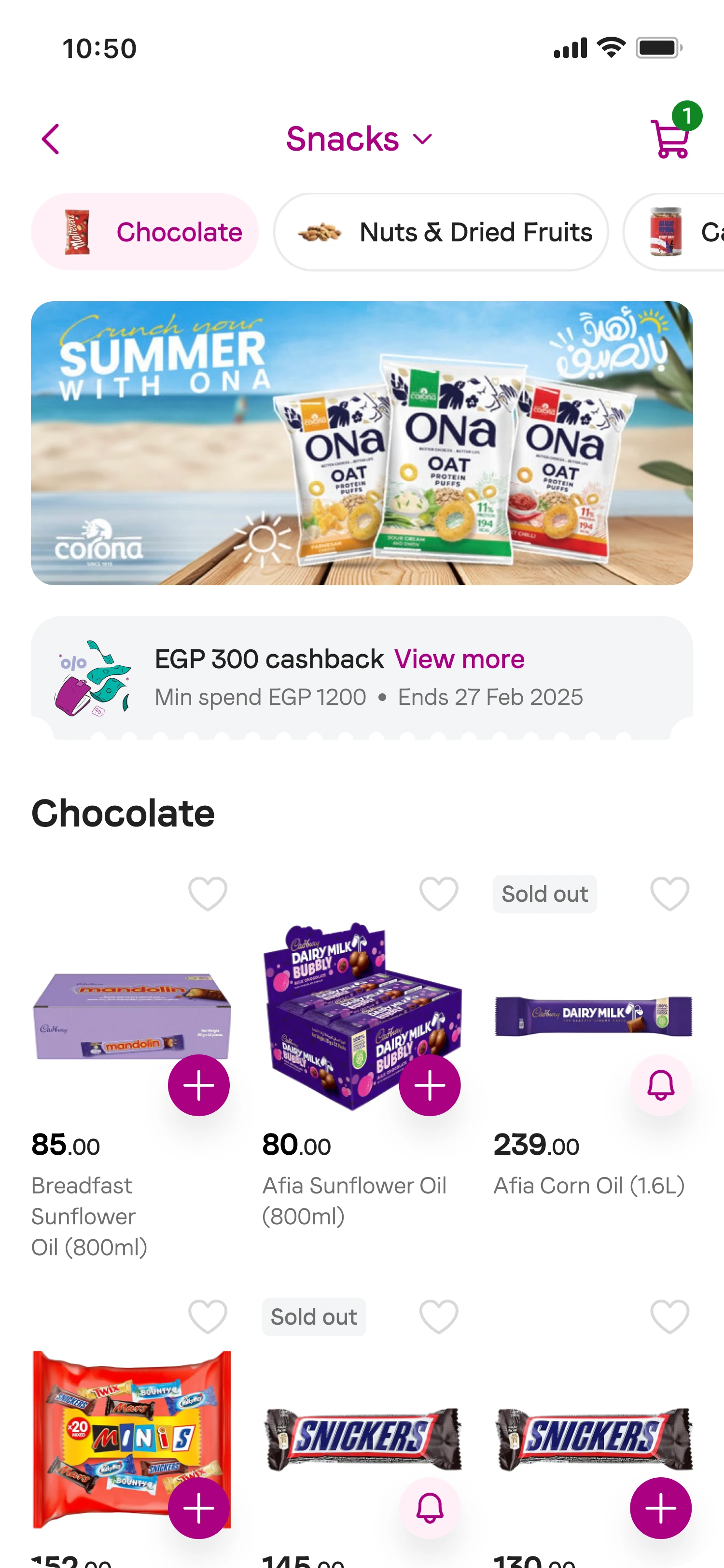
Chosen: a sticky offer component on category listing pages, accessible throughout browsing without occupying merchandising space.
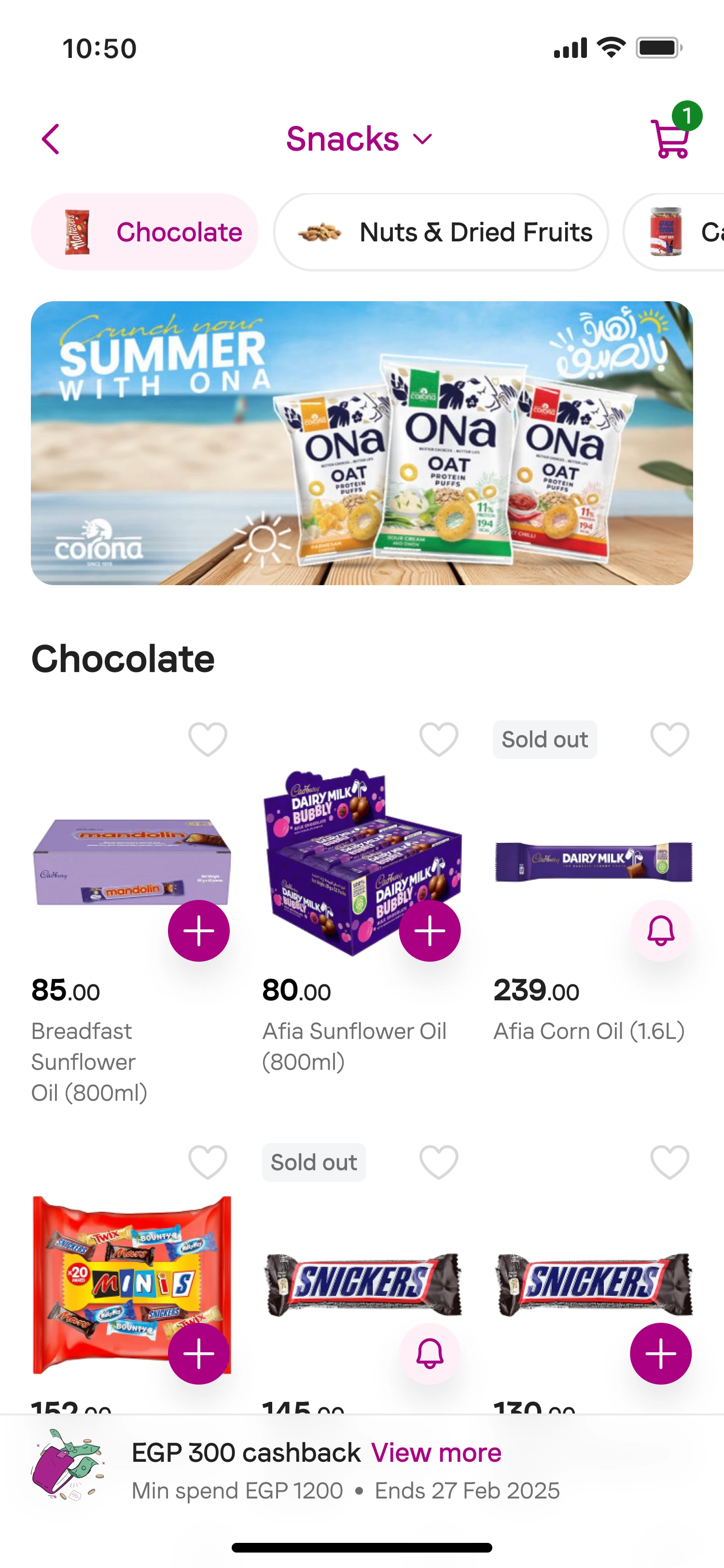
Persistent when useful. Absent when attention belongs to products.
Interaction logic
Show only when an eligible offer exists



Hide during downward scrolling to protect product discovery.
Prioritize the nearest-expiring offer first



Reappear when the user scrolls upward
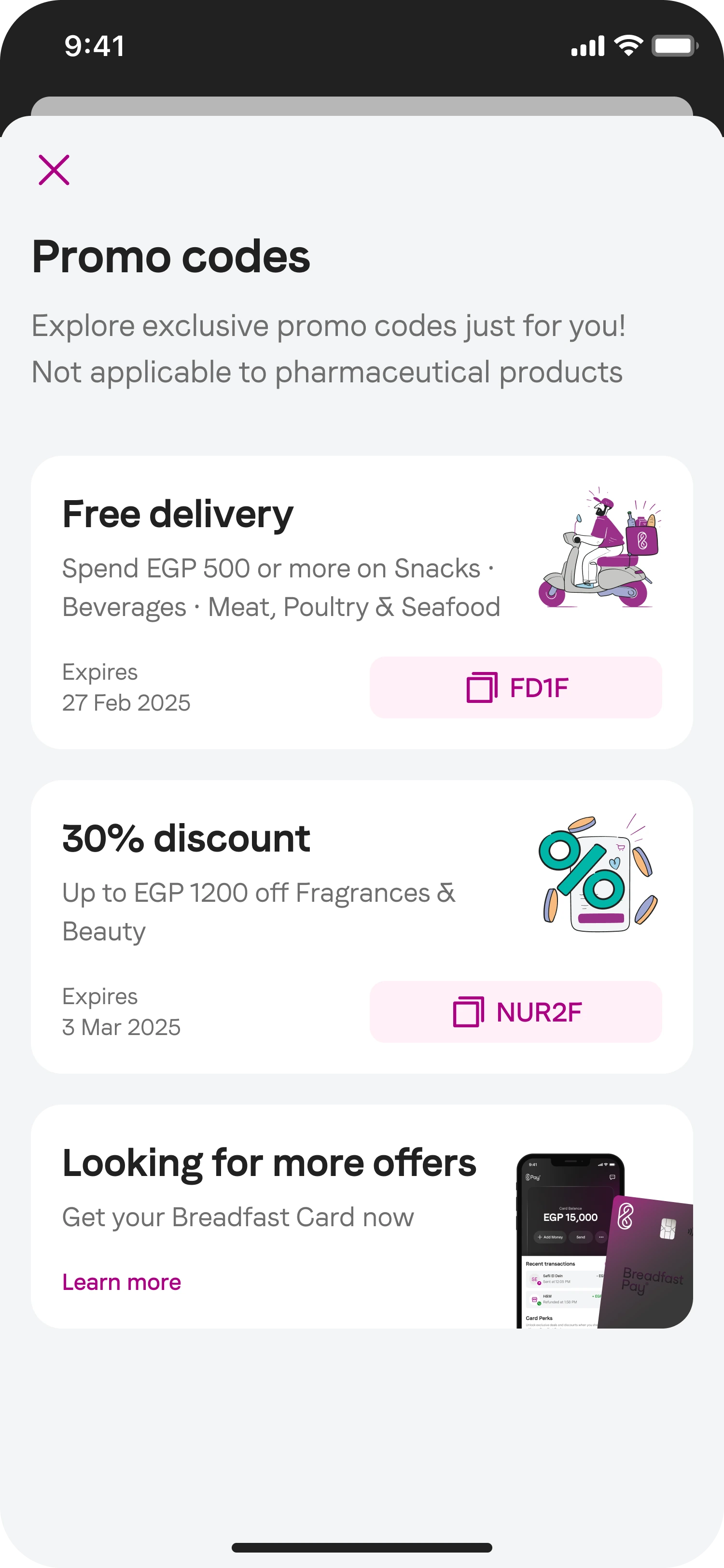
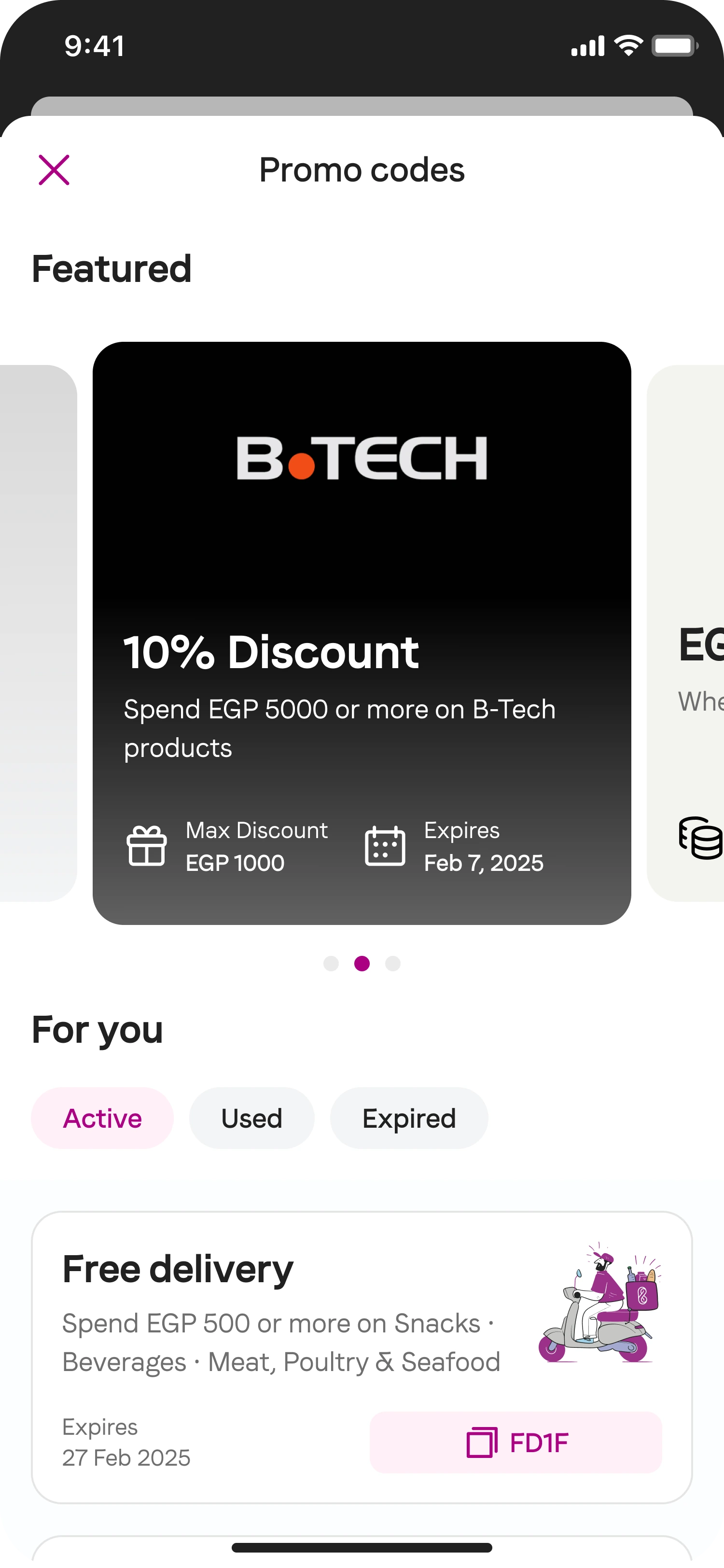
Tap to open Offers Hub for full details



Distinct illustration per offer type for faster scanning
Relevant · Timely · Respectful · Continuous
In the live app
Two short recordings show how the component responds during browsing and connects customers to their available codes.
The sticky offer hides during downward scrolling and returns as browsing direction changes.
Open the offers hub, copy a code, and receive confirmation before returning to shopping.
Live app recordings · Current offers and UI may differ from the version used in the experiment.
System
Coverage · Coupon type · Usage limits · Order limits · Registration criteria · Dates · Order type
Checkout dependency
Engineering complexity
Discount-budget risk
Would blur whether discovery drove redemption
Follow the full flowScroll →
Experiment design
External campaign communication
No sticky offer component during browsing.
Hypothesis: customers exposed to eligible offers during shopping will redeem more coupons.
Eligible offers visible during shopping
A/B test results

24-day controlled experiment · 306,965 customers · 50/50 split
Business impact
A projection from the experiment, not realized revenue.
Operating model
Promotion moved from a moment in a channel to a capability inside the shopping journey.
Future opportunities
Breadfast Pay cross-sell: surface card-exclusive perks where users are already looking for savings.
Featured brand promotions: promoted top-of-hub placement for branded offers from partners.
Future concepts, separate from the tested MVP.
Next case study / Home Navigation
From grocery app to everyday platform. ↗